
24
2024
-
05
Beijing Shennaming Technology participated in the Automotive Casting Machining Innovative Technology Solutions Forum and delivered a keynote speech.
From May 22 to 24, the Third China International Conference on Lightweight Aluminum and Magnesium Applications in the Automotive Industry was successfully held in Hefei. Beijing Shenming Technology participated in the “Automotive Casting and Machining Innovative Technology Solutions” sub-forum, where the company’s Deputy General Manager, Jiang Wei, delivered a presentation titled “An Overview of the Fundamentals of Innovative Production Line Design.”
From May 22 to 24, the Third China International Conference on Lightweight Aluminum and Magnesium Applications in the Automotive Industry was successfully held in Hefei. Beijing Shenming Technology participated in the “Automotive Casting and Machining Innovative Technology Solutions Sub‑Forum,” where the company’s Deputy General Manager, Jiang Wei, delivered a presentation titled “An Overview of the Fundamentals of Innovative Production Line Design.”
As global attention to environmental protection and energy efficiency continues to grow, vehicle lightweighting has emerged as a key trend in the rapid development of new‑energy vehicles. Drawing on the growth opportunities presented by NEV manufacturing and the associated requirements for production‑line design and equipment utilization, General Manager Jiang outlined the essential principles of innovative line design and shared case studies of flexible production systems, reaffirming his commitment to expanding into the NEV sector.
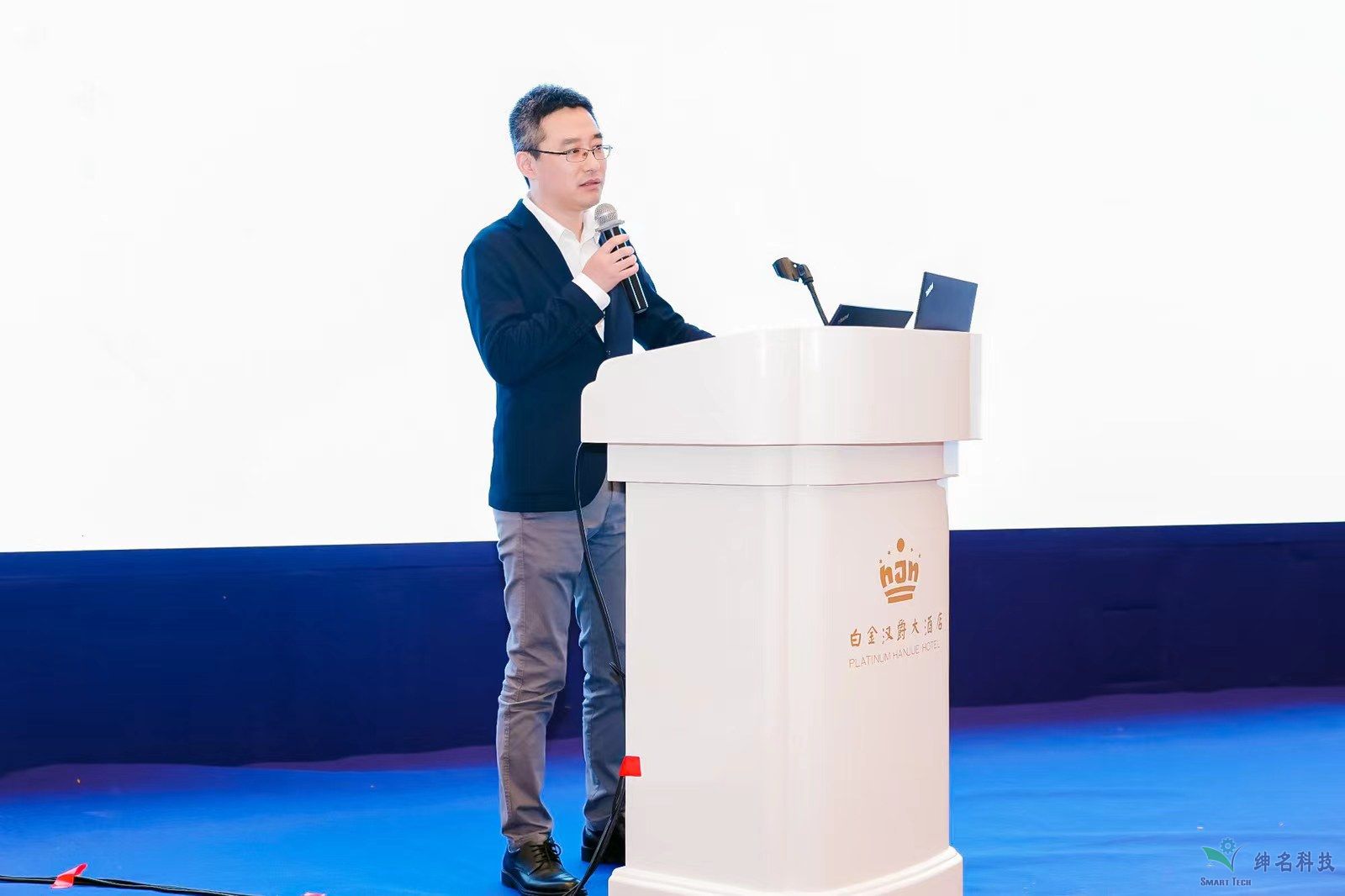
We know that designing an innovative production line—whether automated, digitalized, or intelligent—is a systems‑engineering endeavor. It requires a thorough understanding of the customer’s requirements, as well as the part geometry, manufacturing processes, machine tools, workholding solutions, and other critical factors, in order to determine the appropriate automation approach and layout. If any one of these interconnected elements encounters issues, it can lead to production‑line failure or fall short of the expected performance. “In terms of product (part) process engineering, only by fully grasping the structure of the parts being machined can we develop a rational, reliable process flow with a reasonably balanced cycle time. When selecting equipment, while ensuring stability and reliability, we must also weigh brand reputation and cost‑effectiveness. Moreover, the choice of tooling, fixtures, and cutting tools is equally crucial, as they directly impact the overall performance of the production line,” explained General Manager Jiang. “Of course, throughout every stage of automated‑system design—and indeed across its entire lifecycle—safety must be prioritized at every step, from design and installation to operation.”
Subsequently, General Manager Jiang provided a detailed overview of the design, development, and implementation processes, drawing on specific case studies. To date, we have deployed multiple flexible automated production lines for our clients, including an excavator pin‑shaft machining line, an automated caliper machining line, a rear axle housing machining line, a third‑generation wheel hub unit production line, an intelligent hydraulic cylinder production line, an automated planetary carrier production line, an automated machining line for new‑energy motor housings, an automated transmission gear line, an automated differential housing production line, a flexible automated shaft‑machining line, an automated large bearing housing line, an automated hydraulic valve body line, and an automated shock absorber assembly line. These lines are currently operating smoothly.
The development of flexible automated production lines hinges on a highly professional team. Our company boasts a technical team with strong expertise, broad service capabilities, and advanced software‑and‑hardware proficiency, enabling us to research, design, and integrate flexible automated production lines that combine CNC machine tools, industrial software, and state‑of‑the‑art robotics. Specifically, the automation team is responsible for system layout, manufacturing, assembly, and commissioning; the digitalization team formulates an optimized digital system based on a thorough understanding of each component’s functions and underlying logic; and the installation, commissioning, and delivery team carries out on‑site installation, part machining, and comprehensive system integration according to the established design. Finally, our after‑sales service team ensures the stable, long‑term operation of the production line, giving customers peace of mind.
In the age of intelligence, rapid product evolution has created an urgent need for greater “flexibility” in production line design and manufacturing processes. For the manufacturing sector, the three key challenges—“quality,” “cost,” and “delivery”—have long been top priorities. Beijing Shenming Technology will continue to enhance its competitive edge, leveraging cutting-edge technologies and comprehensive services to drive high-quality development and progress in the automotive industry.

Leading intelligent manufacturing with five-axis machine, compound machine and high-end equipment
Contact Us
Address: Room Wangjing SOHOT2-1-1606, No.1 Futong East Street, Chaoyang District, Beijing (100102)
Telephone:010-57076158
Fax: 010-57076358
Website:www.beijingsmart.com
E-mail:master@beijingsmart.com

Video Number
Subscription Number
TikTok
Small program